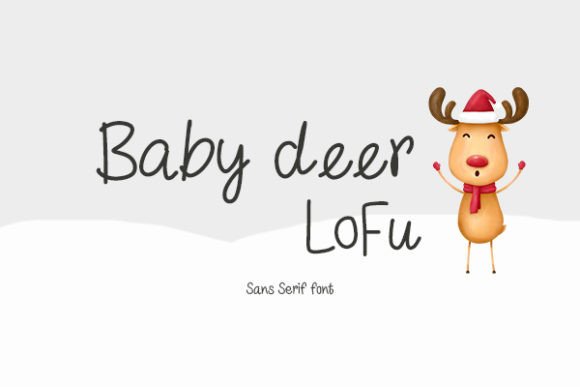
Baby Deer Lofu Font Review
There I was, staring at a blank brand board, trying to find the right tone for a new boutique café concept. The client wanted something warm, approachable, and a little whimsical. I scrolled through my font library, testing everything from clean sans serifs to bold display fonts, but nothing quite clicked. Then I remembered Baby Deer Lofu—a handwritten script with a casual, friendly vibe. It felt like the missing piece.
A Friendly Handwritten Typeface
Baby Deer Lofu is exactly what it sounds like: a soft, informal, and cute handwritten font. Its strokes are slightly uneven, giving it that handcrafted, personal feel. It’s not overly ornate, but it has enough character to stand out without being distracting. The letterforms have a gentle flow, making it perfect for projects that need a touch of warmth and personality.
The font feels like it was drawn with a pen on a notebook page, with subtle variations in thickness and spacing. It doesn’t have the rigid structure of a traditional script, which makes it more versatile for modern branding. Whether you’re designing a logo, a social media post, or a packaging label, Baby Deer Lofu adds a unique, human touch.
Testing Baby Deer Lofu in Real Projects
I started by placing it on a logo draft for the café. The name was simple—just the café’s title—but the font gave it an immediate sense of charm. It worked well as a headline, sitting nicely above a more neutral body text. On a business card, it added a playful edge without overwhelming the design. When paired with a serif font for the address and contact info, it created a balanced contrast that felt both professional and inviting.
For the packaging mockup, I used Baby Deer Lofu on a coffee bag label. The font looked great against a minimalist background, adding a personal touch that made the product feel more authentic. It also worked well on a shop sign, where its casual style helped convey the café’s laid-back atmosphere.
In web design, I tested it on a homepage hero section. As a heading, it stood out without being too flashy. It didn’t work as well for long paragraphs, but that’s expected from a handwritten font. For social media graphics, it was a hit—perfect for Instagram posts, Facebook banners, and Twitter headers, especially when paired with a more structured typeface.
When to Use Baby Deer Lofu
Baby Deer Lofu shines as a display or accent font. It’s ideal for headlines, logos, and short phrases that need a personal, artistic touch. It works best in creative projects that aim for a relaxed, friendly, or nostalgic mood. Think diary planners, wedding invitations, thank you cards, or handmade product labels.
It’s not the best choice for body text or formal corporate use. At smaller sizes, the irregularity of the letters can affect readability. And if you're designing for a high-end or traditional brand, Baby Deer Lofu might not align with the desired tone. But for casual, fun, or artisanal brands, it’s a strong contender.
Font Pairing and Design Tips
Pairing Baby Deer Lofu with a complementary font can elevate its impact. A classic serif like Georgia or a clean sans serif like Helvetica can balance its casual nature. For a more modern look, try pairing it with a geometric sans serif or a minimalist script. The key is to maintain visual harmony while letting the font shine.
If you’re using it in a logo or brand identity system, consider using different weights or alternates to add variety. Some fonts include ligatures or swashes that can enhance the design. Always test the font across different mediums—print, digital, and social media—to ensure it maintains its character and legibility.
Practical Considerations
Before using Baby Deer Lofu in client work, make sure to check the licensing terms. Most premium fonts allow for commercial use, but it’s important to confirm that it’s suitable for your specific project, whether it’s a website, print material, or merchandise.
Also, take time to experiment with the font in different contexts. Try it on various backgrounds, colors, and sizes to see how it performs. If you’re unsure, use it sparingly at first—maybe as a headline or a tagline—before committing to a full brand system.
Ultimately, Baby Deer Lofu is a versatile, expressive font that brings a unique personality to any design. Whether you’re working on a boutique brand, a creative studio identity, or a small business project, it’s worth considering for its charm and ease of use.